

Geographic Information System (GIS)
"A GIS is any system that captures, stores, analyses, manages, and presents data linked to location; simply, it is the merging of cartography, statistical analysis, and database technology. GIS systems are used widely in real world applications from cartography to utility management and from urban planners to emergency services. A GIS has three elements: a digital map, digital data (displayed on the map) and GIS software that links the two and carries out both the mapping and analysis of the data." (Geographical Association n.d.)

Geographical Association. n.d. “Geospatial Technologies (Including GIS).” Accessed April 14, 2021. https://www.geography.org.uk/Geospatial-technologies.
Related Content
Article
利用空间观测技术绘制小岛红树林分布图
Translated by Dr. Mengyi Jin
红树林因其自然景观和丰富的生物多样性而全球闻名,这一独特的生态系统在其所处的沿海环境中发挥着重要的作用。除了维持生物多样性,红树林还能有效抵御海岸侵蚀和风暴潮(Menendez et al. 2020),并具有很高的碳汇能力(Lovelock & Duarte 2019)。此外,红树林还有助于支持沿海居民生计, 维持海洋健康, 以及保护生物多样性(Dasgupta et al. 2022;Mallick et al. 2021)。尽管红树林在生态系统中具有关键作用,但据估算,自20世纪50年代以来,全球约有35%的红树林栖息地已被破坏或退化(Valiela et al. 2001)。受到人类活动和气候变化的影响,这一趋势预计仍将持续(Akram et al. 2023)。
Capacity Building and Training Material
ARSET - Application of NASA SPoRT-Land Information System (SPoRT-LIS) soil moisture data for drought
Event
Local Perspectives Case Studies
Project / Mission / Initiative / Community Portal
Stakeholder
Person
María José Molina-Montero
Geographer at FAB-LAB Inter-American Institute for Cooperation on Agriculture
María José Molina Montero is a geographer. She holds a master's degree in Geographic Information Systems and Remote Sensing obtained in 2019, she has amassed almost 10 years of experience in the utilization and management of satellite imagery for developing a range of geospatial applications. She has served as a consultant in the public and private sectors, and for cooperation bodies such as the United Nations Development Programme (UNDP) and the Inter-American Institute for Cooperation on Agriculture (IICA), focusing on risk management, climate change, water resources, and agriculture.
Jumpei Takami
Associate Expert in Remote Sensing United Nations Office for Outer Space Affairs
Proficient in Remote Sensing and Geographic Information Systems with Machine Learning approach: Analysis of disaster risk reduction and management associated with climate change using remote sensing and geographic information system technologies and implementation of disaster-oriented projects; landslide, flooding, drought, and land subsidence, optionally with machine learning approaches; forest inventory for canopy height and above ground biomass, and planning, design, construction, and maintenance of civil engineering construction projects.
Jiayun Huang
Intern United Nations Office for Outer Space Affairs
Jiayun Huang was a master student at Imperial College London, specializing in ecological applications. She holds a bachelor's degree in Environmental Science. Her research includes a wide range of topics related to environmental monitoring, evaluation, and management using remote sensing technology. She has undergone professional training in field investigations and laboratory operations, and is able to integrate them with remote sensing technology in the research projects.
Mohamed Yasser Ayoub
EO Data Processing Engineer Egyptian Space Agency
Mohamed Yasser holds a Bachelor of Science in Earth Science from Alexandria University and currently serves as an Earth Observation Data Processing Engineer at the Egyptian Space Agency. Specializing in various aspects of satellite data processing, he focuses on generating preprocessed satellite image products and formulating product quality matrices in his role.
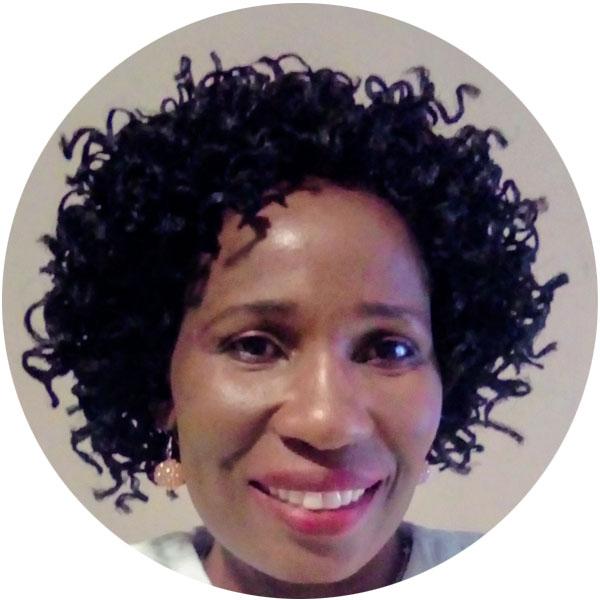
Esther Maina
GIS and Remote Sensing expert Kenya Space Agency
Esther W. Maina is a skilled geospatial and remote sensing expert with over five years of experience leveraging space-based technologies to advance food systems resilience, natural resource management, and policy development in Kenya. She holds a Bachelor of Science in Geospatial Information Science from Dedan Kimathi University of Technology and a Master’s in Space Entrepreneurship at the European Institute of Innovation for Sustainability in Italy.
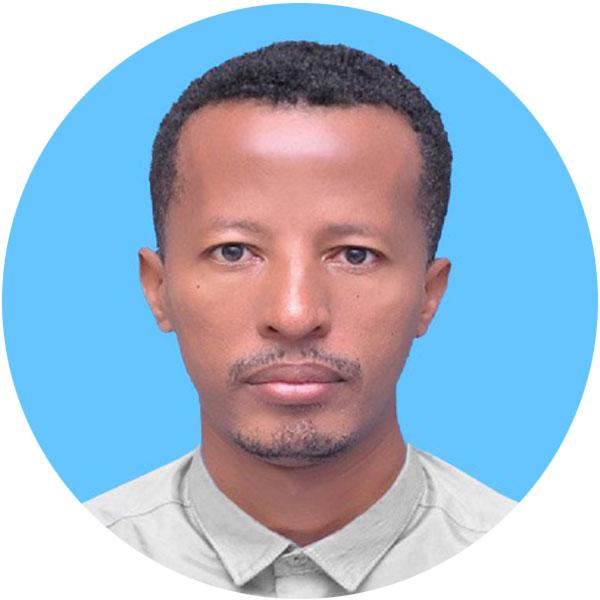
Victor Mukununugwa
Senior Scientist Zimbabwe National Geospatial and Space Agency
Victor Mukungunugwa is a graduate Aerospace Engineer from the National Aerospace University of Ukraine. Upon completion, he acquired a cum-laude Honors BSc degree in Aircraft and Rocket Engineering in 2012. His first job was as an assistant lecturer and a lab technician at the University of the Witwatersrand in South Africa where he was doing his MSc in Unmanned Aerial Vehicle Designing. In 2013 he joined Terracam Professional UAVs Pvt Ltd where he acquired his drone pilot and worked as a senior project manager for aerial surveys.
Jotham Ayanga
Natural Resource Scientist Directorate of Resource Surveys and Remote Sensing, Kenya
Jotham's contributions are instrumental in the mission of the Directorate of Resource Surveys and Remote Sensing, Kenya to leverage advanced technologies for environmental monitoring and sustainable resource management, directly supporting Kenya’s efforts to protect its natural resources in the face of climate change and development pressures. My work not only enhances national environmental policies but also contributes to regional conservation initiatives, making a lasting impact on the landscape and community well-being.
Marina Agarkova
Intern United Nations Office for Outer Space Affairs
Marina Agarkova received a bachelor’s degree in Geography at the University of Vienna with a specialization in Cartography and Geoinformation. She is currently pursuing a master’s degree in Cartography and Geoinformation at the University of Vienna and writing her master’s thesis. Her university studies involved courses such as applied image processing and remote sensing, geography of climate and hydrology and geoecology.