

Irrigation

"The controlled application of water to arable lands to supply crop water requirements not satised by rainfall." (Virginia Polytechnic Institute and State University, n.y.)
 

Sources

Virginia Polytechnic Institute and State University. "A Glossary  of Water-Related Terms", by Brian Benham. Publication 442-759
 

Related Content

Article

The use of space-based technology and data for the Water-Energy-Food Nexus

The article discusses the use of space technology for the Water-Energy-Food (WEF) Nexus. The nexus was formed to address issues surrounding the increasing demand for water, energy and food. Drivers of the nexus are, for example, an increasing population, urbanisation and economic development. The article aims to demonstrate the inclusive solutions and initiatives from organisations such as United Nations, Food and Agriculture Organization (FAO) and Group on Earth Observations (GEO). Globally available data for the nexus and especially data from satellite remote sensing are discussed. Several case studies for finding solutions related to the nexus are examined. The case studies discuss hydrological modelling, water scarcity, irrigation practices and crop monitoring. The Global Land Evaporation Amsterdam Model dataset and Moderate Resolution Imaging Spectroradiometer instrument are used in these case studies. Satellite remote sensing products for the example case of the variable soil moisture are examined. Some of the leading missions for soil moisture are National Aeronautics and Space Administration (NASA) Soil Moisture Active Passive (SMAP) and European Space Agency (ESA) Soil Moisture and Ocean Salinity (SMOS). The article mentions NASA Gravity Recovery and Climate Experiment (GRACE) and Gravity Recovery and Climate Experiment Follow-On (GRACE-FO) missions, as well as ESA Climate Change Initiative (CCI) programme. Future work aims at an integrated approach and at achieving the Sustainable Development Goals.
Mapping and Monitoring Irrigated Agriculture from Space

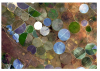
Irrigation illustrates a major dilemma of agriculture: On the one hand, a growing world population demands more food and biomass (for example for energy production). On the other hand, natural resources such as water are only available in limited quantities and excessive use often leads to the degradation of ecosystems, which in turn has adverse effects on agricultural production and local livelihoods.

Mapping and Monitoring Irrigated Agriculture from Space

Irrigation illustrates a major dilemma of agriculture: On the one hand, a growing world population demands more food and biomass (for example for energy production). On the other hand, natural resources such as water are only available in limited quantities and excessive use often leads to the degradation of ecosystems, which in turn has adverse effects on agricultural production and local livelihoods.

Capacity Building and Training Material

Water Productivity and Water Accounting using WaPOR

Water Productivity and Water Accounting using WaPOR (the portal to monitor Water Productivity through Open-access of Remotely sensed derived data) is an open online course targeting practitioners and academicians who are working in water resources management and related fields and have interest in applying open access remote sensing data and other open data to assess the water resources situation and water productivity and the extent to which water productivity increases have an effect on different water users in a river basin context.

Irrigation Estimates from Remote Sensing and Land Surface Modelling

Irrigation is the most impacting anthropogenic activity on the hydrological cycle.
Despite this, the knowledge of irrigated areas and the amounts of water used for such purpose is limited.

Models and remote sensing technologies proved to be useful tools for monitoring irrigation dynamics.

This presentation provides a comparison between two different approaches (one satellite-based and one model-based) aimed at estimating irrigation quantities developed within the European Space Agency (ESA) Irrigation+ project.

Event

Local Perspectives Case Studies

Stakeholder

Govind Ballabh Pant University of Agriculture and Technology Pantnagar

G. B. Pant University of Agriculture and Technology, also known as Pantnagar University, is the first agricultural university in India. The University lies in the campus town of Pantnagar in Kichha Tehseel and in the district of Udham Singh Nagar, Uttarakhand. The university is regarded as the harbinger of the Green Revolution in India. Pantnagar University is regarded as a significant force in the development and transfer of High Yielding Variety of seeds and related technology.

Person

Space-based Solution

Data-driven irrigation demand forecasting for rotational water management under the Warabandi system - in development

The proposed solution leverages Earth Observation (EO) and climate data to develop a machine learning-based irrigation demand forecasting system tailored for smallholder farmers operating under the Warabandi system. In regions where rotational irrigation governs water distribution, farmers often lack accurate tools to forecast short-term irrigation needs, leading to overuse or underuse of water, both of which impact productivity and efficiency.