

Nigeria

Alpha 3
NGA

Related Content

Article

Interview with Kabari Sam, Senior Lecturer at University of Portsmouth UK
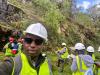
Dr. Kabari Sam is a Senior Lecturer in Environmental Systems and Course Lead for BSc Environmental Science and BSc Marine Environmental Science at the University of Portsmouth. A Chartered Environmentalist (CEnv), Fellow of the Higher Education Academy (FHEA), and Member of the Institution of Environmental Sciences (MIEnvSc), his research focuses on water quality, hydrocarbon pollution, environmental risk, sustainability, and environmental governance. Originally from the Niger Delta region of Nigeria, Dr. Sam’s work is shaped by firsthand experience of the environmental and socio-economic impacts of long-term oil pollution. His research explores contaminated land and groundwater systems, environmental remediation, climate resilience, blue carbon ecosystems, and the public health implications of polluted environments, particularly in vulnerable coastal and oil-impacted communities. Dr. Sam has contributed to research and advocacy on sustainable water management, mangrove conservation, microplastics pollution, and ecosystem restoration across developing and developed regions. His work increasingly examines how geospatial analysis, Earth Observation technologies, and environmental monitoring can strengthen water governance, improve pollution detection, and support evidence-based decision-making. Through research, policy engagement, and community advocacy, he has supported initiatives aimed at improving access to safe drinking water and promoting environmental accountability in regions affected by industrial contamination. Passionate about bridging science, policy, and communities, Dr. Sam is committed to advancing sustainable and inclusive approaches to environmental management, climate resilience, and water security.


L’Utilisation des Données de Télédétection et des SIG pour la Gestion des Catastrophes Liées aux Inondations au Nigeria.

Merci à Jean Francois Regis Adoupo d'avoir traduit cet article volontairement.

Le changement lent mais progressif et régulier des conditions climatiques résultant du réchauffement de la planète constitue de plus en plus une grande menace pour l'environnement et l'existence de la race humaine sur terre. Ce phénomène est en partie causé par des inondations catastrophiques récurrentes dans les zones inondables du monde entier.

L’Utilisation des Données de Télédétection et des SIG pour la Gestion des Catastrophes Liées aux Inondations au Nigeria.

Merci à Jean Francois Regis Adoupo d'avoir traduit cet article volontairement.

Le changement lent mais progressif et régulier des conditions climatiques résultant du réchauffement de la planète constitue de plus en plus une grande menace pour l'environnement et l'existence de la race humaine sur terre. Ce phénomène est en partie causé par des inondations catastrophiques récurrentes dans les zones inondables du monde entier.

Interview with Joshua Ubah, Geospatial Environmental Engineer

Joshua is a Master’s student in Tropical Hydrogeology and Environmental Engineering at Technische Universität of Darmstadt. His interest is focused on hydrogeological processes, groundwater modelling, application of remote sensing and GIS in environmental studies, water management and climate change. He also works as a graduate Intern at AgriWatch BV, a company that applies geospatial solutions for precision Agriculture. As a graduate intern, he applies his interdisciplinary knowledge in developing smart-farming solutions using space-based technologies to farmers in the Twente region of the Netherlands. He deploys satellite imagery, field studies and machine learning algorithms to predict the effect of climate change on arable crops. He also utilizes precipitation data to predict rainfall events to aid farmers in determining planting and harvesting periods. Joshua earned a bachelor’s degree in Geological Sciences, his bachelor’s thesis research aimed at carrying out paleoenvironmental reconstruction using paleocurrent indicators of water flow and direction, and application of ArcGIS to produce maps. Currently, he is working on his master’s thesis with emphasis on the impact of the ancient climate on the paleoenvironment particularly on vegetation, where he tries to research plants response to long-term greenhouse periods and short-term warming events on various timescales throughout Earth's history. His research interests revolve around the application of space technologies in providing solutions and tackling climate change.

Interview with Kabari Sam, Senior Lecturer at University of Portsmouth UK

Dr. Kabari Sam is a Senior Lecturer in Environmental Systems and Course Lead for BSc Environmental Science and BSc Marine Environmental Science at the University of Portsmouth. A Chartered Environmentalist (CEnv), Fellow of the Higher Education Academy (FHEA), and Member of the Institution of Environmental Sciences (MIEnvSc), his research focuses on water quality, hydrocarbon pollution, environmental risk, sustainability, and environmental governance. Originally from the Niger Delta region of Nigeria, Dr. Sam’s work is shaped by firsthand experience of the environmental and socio-economic impacts of long-term oil pollution. His research explores contaminated land and groundwater systems, environmental remediation, climate resilience, blue carbon ecosystems, and the public health implications of polluted environments, particularly in vulnerable coastal and oil-impacted communities. Dr. Sam has contributed to research and advocacy on sustainable water management, mangrove conservation, microplastics pollution, and ecosystem restoration across developing and developed regions. His work increasingly examines how geospatial analysis, Earth Observation technologies, and environmental monitoring can strengthen water governance, improve pollution detection, and support evidence-based decision-making. Through research, policy engagement, and community advocacy, he has supported initiatives aimed at improving access to safe drinking water and promoting environmental accountability in regions affected by industrial contamination. Passionate about bridging science, policy, and communities, Dr. Sam is committed to advancing sustainable and inclusive approaches to environmental management, climate resilience, and water security.

Interview with Joshua Ubah, Geospatial Environmental Engineer

Joshua is a Master’s student in Tropical Hydrogeology and Environmental Engineering at Technische Universität of Darmstadt. His interest is focused on hydrogeological processes, groundwater modelling, application of remote sensing and GIS in environmental studies, water management and climate change. He also works as a graduate Intern at AgriWatch BV, a company that applies geospatial solutions for precision Agriculture. As a graduate intern, he applies his interdisciplinary knowledge in developing smart-farming solutions using space-based technologies to farmers in the Twente region of the Netherlands. He deploys satellite imagery, field studies and machine learning algorithms to predict the effect of climate change on arable crops. He also utilizes precipitation data to predict rainfall events to aid farmers in determining planting and harvesting periods. Joshua earned a bachelor’s degree in Geological Sciences, his bachelor’s thesis research aimed at carrying out paleoenvironmental reconstruction using paleocurrent indicators of water flow and direction, and application of ArcGIS to produce maps. Currently, he is working on his master’s thesis with emphasis on the impact of the ancient climate on the paleoenvironment particularly on vegetation, where he tries to research plants response to long-term greenhouse periods and short-term warming events on various timescales throughout Earth's history. His research interests revolve around the application of space technologies in providing solutions and tackling climate change.

Local Perspectives Case Studies

Map

Disclaimer: The designations employed and the presentation of material on this map do not imply the expression of any opinion whatsoever on the part of the Secretariat of the United Nations concerning the legal status of any country, territory, city or area or of its authorities, or concerning the delimitation of its frontiers or boundaries. They solely serve navigation purposes on this page. Please also note that the map does not filter items if the search term filter is used.

Click on any of the highlighted countries to retrieve further information.

Project / Mission / Initiative / Community Portal

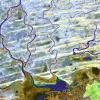
Space-Enabled Modeling of the Niger River to Enhance Regional Water Resources Management

River and floodplain landscapes are constantly undergoing change due to natural and manmade processes putting pressure on fluvial systems, such as reservoirs, intensive agriculture, high-impact repetitive droughts and floods and the overall effects of climate change. All these bring about considerable changes, some of which irreversibly degrade ecosystem services, local economies and impact lives, particularly in sensitive transitional zones such as the Sahel region in Africa and its Niger River Basin (NRB).

Stakeholder

University of Surrey

The University of Surrey is a leading research and higher education institution in the United Kingdom, known for its strengths in space technology and water research, among other fields.

Geohazard Risk Mapping Initiative

The Geohazards Risk Mapping Initiative is an initiative that deploys volunteer youths, who are skilled at using Geographic Information Systems and satellite imagery analysis to create flood susceptibility and post-disaster maps in Nigeria.

Federal University of Technology Akure, Nigeria

The Federal University of Technology, Akure (FUTA), a top-ranking university of technology in Nigeria and indeed the nation's pride. Established in 1981, the university has grown tremendously, stretching its academic disciplines and research across eight different schools and over fifty academic departments.

Vision

To be a world-class University of Technology and a centre of excellence in training, research and service delivery

Global Water Partnership

The Global Water Partnership (GWP) is a global action network with over 3,000 Partner organisations in 179 countries. The network has 69 accredited Country Water Partnerships and 13 Regional Water Partnerships.

The network is open to all organisations involved in water resources management: developed and developing country government institutions, agencies of the United Nations, bi- and multi-lateral development banks, professional associations, research institutions, non-governmental organisations, and the private sector.

National Space Research and Development Agency

The National Space Research and Development Agency (NASRDA) is the government agency of Nigeria responsible for space science, technology and applications. Established in 1999, NASRDA oversees the country's space programs, including satellite development, remote sensing and geospatial applications for national development. The agency operates satellites like NigeriaSat-1, NigeriaSat-2, NigeriaSat-X and NigComSat-1R, which support disaster management, environmental monitoring and communication services.

Person

Space-based Solution