Groundwater

Related Content

Landing Page

Groundwater is the largest accessible source of freshwater on Earth and a vital lifeline for billions of people, particularly in arid and semi-arid regions. However, unsustainable extraction, weak governance and climate change are causing severe depletion of aquifers worldwide. Mismanagement leads to long-term water scarcity, declining groundwater quality and in many regions, permanent land subsidence (Famiglietti 2014).

Groundwater is the largest accessible source of freshwater on Earth and a vital lifeline for billions of people, particularly in arid and semi-arid regions. However, unsustainable extraction, weak governance and climate change are causing severe depletion of aquifers worldwide. Mismanagement leads to long-term water scarcity, declining groundwater quality and in many regions, permanent land subsidence (Famiglietti 2014).

Local Perspectives Case Studies

Decline in groundwater levels and quality

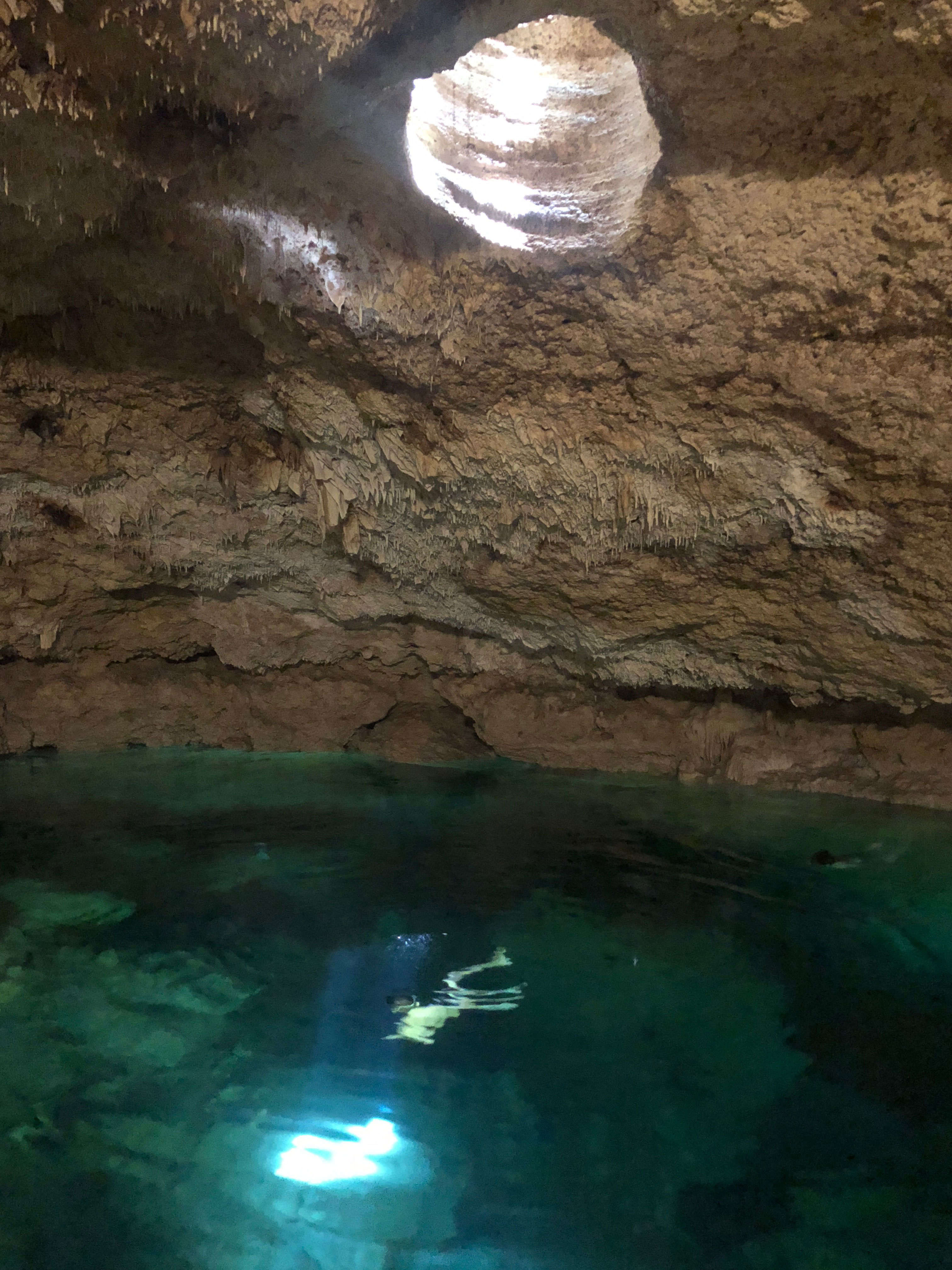
Photo of a cenote in Merida Yucatan, CC license
Decline in groundwater quality is the challenge I have observed and experience in my country. Groundwater systems are particularly important in places where no rivers flows on the surface. In Yucatan, Mexico, for example, there are no rivers on the surface but we can find the Yucatán Peninsula Aquifer one of the biggest aquifers in the world. Today, the peninsula only has a population of 2 million, yet groundwater is being overexploited and polluted. In the peninsula, all socio-economic sectors rely directly or indirectly on groundwater. The main users – agriculture and industry – are causing high levels of pollution and severely overexploiting the cenotes. The quality of groundwater is also being affected by the construction of roads, buildings and other modifications that include pumping wells, infrastructure for tourism and the use of technology to extract and modify groundwater. In addition, warmer temperatures and increasingly unpredictable rainfall during the year are making it harder to store water. Another factor is that the large number of cenotes and lack of reliable hydrological data are making it difficult for users to monitor and control their usage of groundwater. Consequently, the population faces a greater risk to its groundwater reserves than is currently recognized. I would like use time–space evidence from the natural and social sciences for Earth information systems, but to find approaches to better integrate Indigenous knowledge and in situ observations from local communities that can be used to identify/estimate parameters that can support the management of aquifers.Y

Groundwater resource management using artificial intelligence and remote sensing technologies

Groundwater index maps for Bihar
Groundwater is a critical resource for drinking water, agriculture, and industry. With increasing anthropogenic activities and exponentially increasing population, groundwater in India is facing several challenges, related to quality as well as quantity, due to over-extraction, pollution, and climate change. Over-exploitation of groundwater may impact the availability and quality of groundwater which is not sustainable. Moreover, due to pollution in surface water, groundwater quality is also affected. In most of the cities of India, the quality of groundwater is below standard. Remote sensing and artificial intelligence can play a very vital role in monitoring the quantity as well as quality of groundwater. As, it is clear that presently no remote sensors can directly be used for groundwater observations, but by using surface features anomalies and gravity data obtained by various satellites, optimal groundwater management can be done using remote sensing. Space4water is one of the best communities addressing water related issues and work towards sustainable solutions. For the last three years, I am following this community, and I find that the community consists of scientists, NGO, policy makers etc. This combination has the potential to resolve issues related to any challenges related to social issues. I am looking for few global research partners who work for groundwater management using space technology. I am equally looking for data driven resource persons who can collaborate with me on real field conditions of various countries, related to groundwater management. What has been done so far is listed below: • Worked on GRACE satellite data and used it in field condition to study groundwater anomalies of few cities of India. • Developed spatio-temporal maps of Standardized Groundwater Index (SGI). • Worked on water quality of water bodies. • Used various satellite data to map water spread areas of various water bodies. • Worked on machine learning models to study in situ remediation of contaminated groundwater.

The ecohydrological trade-off in Nepal’s Middle Hills: mapping spring decline and groundwater loss in community forests through space-based solutions

Map of Sharadha Khola watershed in Nepal
In Nepal’s Middle Hills, community-managed forests have successfully reversed deforestation, but they are now unintentionally contributing to water insecurity. Afforestation has heavily favored Pinus roxburghii, a fast-growing conifer with high year-round evapotranspiration and low infiltration capacity, significantly reducing groundwater recharge. As pine offers limited economic value, forest users increasingly shift to Sal (Shorea robusta) forests, valued for timber and compostable leaf litter. This shift concentrates human activity—such as litter collection, grazing, and trampling—around Sal patches, causing surface compaction and further reducing infiltration. Combined with unplanned road construction that disrupts natural flow paths, these disturbances have degraded upland recharge zones. Once crucial for replenishing groundwater, these uplands are now losing their recharge capacity, leading to measurable declines in groundwater storage and drying of springs in foothill and riparian zones that once flowed year-round. The consequences are widespread and socio-ecologically severe. Rural and Indigenous communities relying on spring-fed systems for drinking water, irrigation, and livestock now face escalating dry-season scarcity. Women and elderly members of marginalized groups bear the greatest burden, while increasing outmigration to urban centers exacerbates inequality. Yet forest governance remains focused on canopy cover and carbon sequestration, often overlooking essential hydrological processes like infiltration, baseflow, and subsurface storage. The continued decline in groundwater recharge also raises long-term concerns about shallow aquifer sustainability and overall water security. This situation is further complicated by a lack of reliable, long-term ground-based hydrometeorological data—many precipitation, temperature, and stream discharge records are missing or incomplete due to sensor failure—making it difficult to calibrate ecohydrological models and to design informed forest and water policies. Fortunately, space-based technologies provide a powerful solution. Remote sensing allows for long-term monitoring of vegetation, precipitation, soil moisture, and terrain, revealing the drivers of spring decline. When paired with ecohydrological modeling and community knowledge, these tools can guide forest management strategies that restore groundwater recharge and help achieve SDG targets 6, 13, and 15. Goals and milestones: The main goal of this research is to assess and mitigate ecohydrological trade-offs in Nepal’s Middle Hills caused by unscientific forest expansion under community forestry (CF). While CF has successfully increased forest cover, it has often overlooked hydrological impacts—particularly where high water-use species like pine have been planted without considering water balance consequences. This has led to declining baseflows, reduced groundwater recharge, and increased dry-season water stress. A key focus is to bridge the gap between Indigenous forest management practices and scientific understanding of forest-water interactions. By integrating Regional Hydro-Ecological Simulation System (RHESSys), ecohydrological modeling, satellite remote sensing, and community-level knowledge, the project aims to reveal how forest type, topography, and land use influence spring recharge zones, groundwater dynamics, and soil moisture retention. Research has shown that nearly 70 per cent of the springs in the region are degrading, threatening long-term water security. One of the critical goals of this research is to identify vulnerable and resilient spring zones—and ultimately support the rebirth of these springs through improved forest and land-use strategies. Short-term milestones include generating high-resolution maps of vegetation phenology, evapotranspiration, and groundwater storage (1985–2025), and validating RHESSys outputs with both field data and satellite products. In the mid-term, the study will identify groundwater-rich zones for future water-resilient settlements, simulate climate scenarios, and collaborate with local stakeholders. The long-term objective is to promote scientifically informed, community-adapted forest governance that enhances both ecological and water resilience across Nepal’s Middle Hills.


Space-based Solution

Harnessing rain: A system of safe, secure and sustainable drinking water - in development

The system involves a direct collection of rainwater into storage tanks. Implementing such a system has several challenges that a space-based GIS system can address comprehensively. The developed Rain4Drinking portal will be an opensource tool.

The model will be implemented in Google Earth Engine (GEE) and made available to communities through GEE App where they can just provide the shapefile of their rooftop or draw it on the interactive interface to get:

Identification of potential locations/recharge for shallow groundwater in geographically small countries - mapping completed - need in situ data

Solution summary

To address the challenge of water security in Bahrain, this solution integrates space-based technologies and geospatial analysis to identify and monitor potential water resources, particularly shallow groundwater. The methodology involves the use of satellite-derived datasets and terrain modelling tools to analyse hydrological behaviour, soil moisture, and elevation-based drainage characteristics.

Three main data sources were incorporated into the solution: