

Normalized Difference Vegetation Index (NDVI)

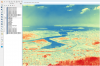
"The normalized difference vegetation index (NDVI) is a standardized index allowing you to generate an image displaying greenness, also known as relative biomass. This index takes advantage of the contrast of characteristics between two bands from a multispectral raster dataset—the chlorophyll pigment absorption in the red band and the high reflectivity of plant material in the near-infrared (NIR) band.

The documented and default NDVI equation is as follows:

NDVI = (NIR - Red) / (NIR + Red)

    NIR = pixel values from the near-infrared band
    Red = pixel values from the red band

This index outputs values between -1.0 and 1.0." (ESRI, 2018)

Sources

"Indices gallery". ArcGIS Pro, ESRI. 2018. 
http://pro.arcgis.com/en/pro-app/help/data/imagery/indices-gallery.htm.
Accessed February 1, 2019.

Related Content

Article

Using space-based technologies to predict mosquito-borne disease outbreaks

Mosquitos are often cited as one of the deadliest animals in the world, causing up to one million deaths per year (WHO, 2020; CDC, 2021). They can carry and transmit a variety of diseases, including malaria, West Nile virus, dengue fever, and Zika virus; transmitting illness across the globe (Figure 1). To help decrease the burden of disease resulting from mosquitos, researchers are utilising satellite data and remote sensing models to better predict where mosquito breeding grounds may occur in the future.

Geospatial analysis of climate change induced drought using NDVI and LST

Ethiopia, like many developing countries, faces significant threat from droughts triggered by climate change. The country's heavy reliance on agriculture for production, export revenues, and employment makes it highly susceptible to climate change-induced challenges, such as frequent floods, droughts and rising temperatures. Therefore, this research aims to assess drought-prone areas in Meyo district, Borena Zone, thereby contributing to the attainment of SDG 13.1 and the creation of a more resilient and sustainable future in the face of climate change. To achieve the objective, the study employs the Normalized Difference Vegetation Index (NDVI) and Land Surface Temperature (LST) as indicators and the drought risk map was developed using weighted overlay analysis. Landsat images and rainfall datasets from December in the years 2002, 2012, and 2022 were analyzed to track changes. The result reveals a clear inverse relationship between NDVI and LST, where higher temperatures coincide with decreased NDVI values, signifying vegetation stress caused by reduced water availability. The study also highlights the deficient rainfall and high drought vulnerability in the norther and eastern parts of the study area. The provided drought risk map classifies areas into Low, Moderate, and High risk, illustrating the evolving drought scenario and it signifies increasing severity of drought risk in recent years, particularly from 2012 to 2022. The finding holds vital information for decision-makers, policymakers, and stakeholders in devising effective strategies to mitigate the adverse effect of drought and build resilience in the of climate change.

Counting every drop: How space technology is rewriting water accounting and auditing

At sunrise in Bundelkhand, Northern India, farmer Ramesh Patel walks across a cracked wheat field, where the delayed and weak monsoon has left his crops wilting and wells running dry. Over the past five years, wells have sunk several meters, and groundwater levels in the region have fallen steadily for more than two decades (CGWB 2021; Niranjannaik et al. 2022). He is not alone: farmers, water managers, industries, and hydropower operators around the world face the same urgent question—how much water do we really have?  

Interview with Sarhan Zerouali

Sarhan Zerouali became fascinated with water at a young age through learning about water scarcity around the world and about traditional methods for locating groundwater. In a space applications course Sahran then learnt about space-based technologies. He is currently working on a research project on how remote sensing and other technologies can help alleviate global challenges arising from land degradation. As an aerospace engineer, Sahran has worked with various modern technologies in his work including nanosatellites, artificial intelligence, and feature extraction algorithms.

Interview with Sarhan Zerouali

Sarhan Zerouali became fascinated with water at a young age through learning about water scarcity around the world and about traditional methods for locating groundwater. In a space applications course Sahran then learnt about space-based technologies. He is currently working on a research project on how remote sensing and other technologies can help alleviate global challenges arising from land degradation. As an aerospace engineer, Sahran has worked with various modern technologies in his work including nanosatellites, artificial intelligence, and feature extraction algorithms.

Launch of Zimbabwe's first Satellite ZIMSAT - 1

What began as the development of a cubesat (BIRD-5) at the Kyushu Institute of Technology in Japan took off on a spacecraft to the International Space Station from the Mid-Atlantic Regional Spaceport at the National Aeronautics and Space Administration's (NASA's) Wallops Flight Facility in Virginia, US on 6 November 2022 (watch the video of the launch of the CRS2 NG-18 (Cygnus) Mission (Antares), in the video below the article).

Capacity Building and Training Material

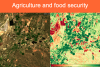
Digital Earth Africa: Agriculture and Food Security

Digital Earth Africa learning platform

This learning platform helps users understand the significance of Earth observations, explore Digital Earth Africa datasets through an interactive map, and get started on the basics of python coding for spatial analysis.

Digital Earth Africa makes Earth observation (EO) data readily available, delivering decision-ready products to the African continent. Data generated by Digital Earth Africa will provide valuable insights for better decision-making across many areas, including resource management, food security and urbanisation.

Space-based Solution