

Snowmelt

"Water formed by melting snow. Snowmelt can move across the landscape as runoff or infiltrate into the soil. In the spring, melting seasonal snowpack moves snowmelt into rivers, streams, lakes, and groundwater. Snowmelt is a water cycle flux." (U.S. Geological Survey, 2022)

Sources

U.S. Geological Survey (USGS). "Water Cycle Glossary Terms". USGS Water Science School. (2022). Link: https://www.usgs.gov/glossary/glossary-water-cycle-terms

Related Content

Article

Transforming polar science: space technologies in assessing Antarctica’s cryosphere
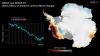
Antarctica, Earth’s southernmost continent, contains the largest reservoir of freshwater on the planet, holding approximately 68.7 per cent of global freshwater in the form of ice sheets and glaciers (NSIDC 2025; Rignot et al. 2019). Together with Greenland, these ice sheets store over 99 per cent of the world’s freshwater ice, with the Antarctic Ice Sheet alone covering nearly 14 million square kilometres and containing about 30 million cubic kilometres of ice (NSIDC 2025). This massive ice reserve plays a crucial role in global sea levels and climate systems (IPCC 2021).

Stakeholder

b.geos GmbH

b.geos offers Earth Observation services using state-of-the-art remote sensing technologies. We develop value-added products, conduct basic research, provide consultancy in remote sensing technologies and applications, as well as training.

Mozaika

Mozaika, The Humanizing Technologies Lab, provides research and development in the field of data science, natural interfaces (human-computer interaction), knowledge management and human insight. At Mozaika we are trying to leverage data science with natural interfaces to provide solutions tailored to human behavior, attitudes and comprehension. The company specializes in building information infrastructures that serve a variety of applications in data as a service or intelligence as a service modes. Our solutions are either human user facing or modules of larger systems.

Person