


Soil Moisture and Ocean Salinity (SMOS)

The Soil Moisture and Ocean Salinity (SMOS) mission, launched on 2 November 2009, is one of the European Space Agency's (ESAs) Earth Explorer missions, which form the science and research element of the Living Planet Programme. It is the first mission to provide, from microwave L-band measurements, global observations of variability in soil moisture and sea surface salinity due to continuous exchange in Earth's water cycle between the oceans, the atmosphere and the land. These key geophysical parameters, soil moisture for hydrology studies and salinity for enhanced understanding of ocean circulation, are both vital for climate change models.

Sources

ESA. 2021. “SMOS.” Earth Online. 2021. https://earth.esa.int/eogateway/missions/smos.

Related Content

Article

Transforming polar science: space technologies in assessing Antarctica’s cryosphere
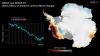
Antarctica, Earth’s southernmost continent, contains the largest reservoir of freshwater on the planet, holding approximately 68.7 per cent of global freshwater in the form of ice sheets and glaciers (NSIDC 2025; Rignot et al. 2019). Together with Greenland, these ice sheets store over 99 per cent of the world’s freshwater ice, with the Antarctic Ice Sheet alone covering nearly 14 million square kilometres and containing about 30 million cubic kilometres of ice (NSIDC 2025). This massive ice reserve plays a crucial role in global sea levels and climate systems (IPCC 2021).