


Tropical

Tropical /equatorial zone spans from 0°–25° (between the tropics).

-    Af = Tropical rainforest 
-    Am = Tropical monsoon
-    Aw = Tropical savanna with dry-winter
-    As = Tropical savanna with dry-summer

Image
Tropical zone

Related Content

Article

Interview with Verónica De Souza, Space Application Director, Bolivarian Agency for Space Activities (ABAE)

My name is Verónica De Souza. I have a degree in Physics with a minor in Geophysics and a Master's degree in Ocean, Atmosphere, and Continental Surface Science. I worked for 13 years at the Bolivarian Agency for Space Activities (ABAE), the last three years in the Space Applications Directorate, focusing primarily on the processing and use of satellite data, especially from Venezuela's VRSS-1/2 satellites. Recently, ABAE has been participating in an inter-institutional committee on the management and sustainability of the country's watersheds. This has led to a growing interest in collecting more up-to-date information on these areas, thereby improving public policies in this regard.

Interview with Verónica De Souza, Space Application Director, Bolivarian Agency for Space Activities (ABAE)

My name is Verónica De Souza. I have a degree in Physics with a minor in Geophysics and a Master's degree in Ocean, Atmosphere, and Continental Surface Science. I worked for 13 years at the Bolivarian Agency for Space Activities (ABAE), the last three years in the Space Applications Directorate, focusing primarily on the processing and use of satellite data, especially from Venezuela's VRSS-1/2 satellites. Recently, ABAE has been participating in an inter-institutional committee on the management and sustainability of the country's watersheds. This has led to a growing interest in collecting more up-to-date information on these areas, thereby improving public policies in this regard.
Interview with Felix Kasiti, PhD Researcher, University of Stirling

I am currently a PhD candidate at the University of Stirling in Scotland, funded by the Natural Environmental Research Council through the IAPETUS DTP. My research focuses on using SAR Polarimetry to map and monitor floods in Scotland and Guyana. Additionally, I use ground radar to understand signal interactions under simulated flooding conditions, aiming to improve flood detection. My goal is to enhance the management and protection of floodplains and wetlands through advanced radar satellite technology and field-tested methodologies. Before my PhD, I worked as an assistant hydrologist at the SERVIR Eastern and Southern Africa project at the Regional Centre for Mapping of Resources for Development in Nairobi, Kenya, from 2019 to 2022. In this position, I led the development of an operational hydrological model that improved access to hydrological data for ungauged rivers in East Africa. I was also the lead hydrologist in the implementation of a flood early warning system in Malawi, integrating ground measurements and satellite-derived water level data to issue flood forecasts.

Interview with Felix Kasiti, PhD Researcher, University of Stirling

I am currently a PhD candidate at the University of Stirling in Scotland, funded by the Natural Environmental Research Council through the IAPETUS DTP. My research focuses on using SAR Polarimetry to map and monitor floods in Scotland and Guyana. Additionally, I use ground radar to understand signal interactions under simulated flooding conditions, aiming to improve flood detection. My goal is to enhance the management and protection of floodplains and wetlands through advanced radar satellite technology and field-tested methodologies. Before my PhD, I worked as an assistant hydrologist at the SERVIR Eastern and Southern Africa project at the Regional Centre for Mapping of Resources for Development in Nairobi, Kenya, from 2019 to 2022. In this position, I led the development of an operational hydrological model that improved access to hydrological data for ungauged rivers in East Africa. I was also the lead hydrologist in the implementation of a flood early warning system in Malawi, integrating ground measurements and satellite-derived water level data to issue flood forecasts.

Local Perspectives Case Studies

Decline in groundwater levels and quality

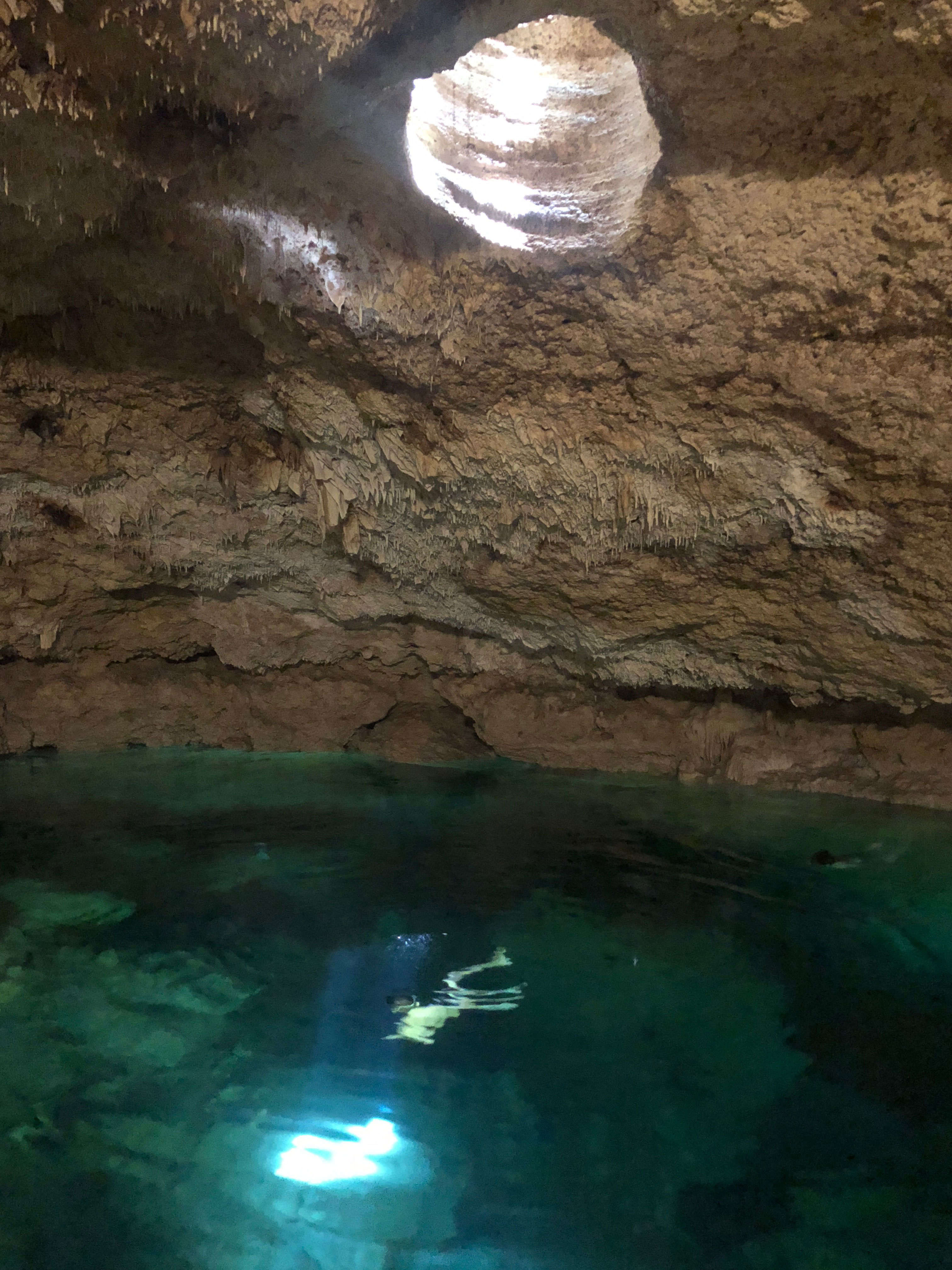
Photo of a cenote in Merida Yucatan, CC license
Decline in groundwater quality is the challenge I have observed and experience in my country. Groundwater systems are particularly important in places where no rivers flows on the surface. In Yucatan, Mexico, for example, there are no rivers on the surface but we can find the Yucatán Peninsula Aquifer one of the biggest aquifers in the world. Today, the peninsula only has a population of 2 million, yet groundwater is being overexploited and polluted. In the peninsula, all socio-economic sectors rely directly or indirectly on groundwater. The main users – agriculture and industry – are causing high levels of pollution and severely overexploiting the cenotes. The quality of groundwater is also being affected by the construction of roads, buildings and other modifications that include pumping wells, infrastructure for tourism and the use of technology to extract and modify groundwater. In addition, warmer temperatures and increasingly unpredictable rainfall during the year are making it harder to store water. Another factor is that the large number of cenotes and lack of reliable hydrological data are making it difficult for users to monitor and control their usage of groundwater. Consequently, the population faces a greater risk to its groundwater reserves than is currently recognized. I would like use time–space evidence from the natural and social sciences for Earth information systems, but to find approaches to better integrate Indigenous knowledge and in situ observations from local communities that can be used to identify/estimate parameters that can support the management of aquifers.Y

Space-based Solution

Harnessing rain: A system of safe, secure and sustainable drinking water - in development

The system involves a direct collection of rainwater into storage tanks. Implementing such a system has several challenges that a space-based GIS system can address comprehensively. The developed Rain4Drinking portal will be an opensource tool.

The model will be implemented in Google Earth Engine (GEE) and made available to communities through GEE App where they can just provide the shapefile of their rooftop or draw it on the interactive interface to get: