


Sentinel-1

The Copernicus Sentinel-1 mission is designed as a two-satellite constellation. Each satellite carries an advanced radar instrument to provide an all-weather, day-and-night supply of imagery of Earth’s surface. The mission ended for Sentinel-1B in 2022.

Sources

Related Content

Article

Transforming polar science: space technologies in assessing Antarctica’s cryosphere
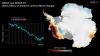
Antarctica, Earth’s southernmost continent, contains the largest reservoir of freshwater on the planet, holding approximately 68.7 per cent of global freshwater in the form of ice sheets and glaciers (NSIDC 2025; Rignot et al. 2019). Together with Greenland, these ice sheets store over 99 per cent of the world’s freshwater ice, with the Antarctic Ice Sheet alone covering nearly 14 million square kilometres and containing about 30 million cubic kilometres of ice (NSIDC 2025). This massive ice reserve plays a crucial role in global sea levels and climate systems (IPCC 2021).

Capacity Building and Training Material

The online documentation of The Global Flood Monitoring (GFM)

The Global Flood Monitoring (GFM) product is a new component of the EU’s Copernicus Emergency Management Service (CEMS) that provides continuous monitoring of floods worldwide, by processing and analysing in near real-time (NRT) all incoming Synthetic Aperture Radar (SAR) imagery acquired by the EU’s Copernicus Sentinel-1 satellites, in Interferometric Wide Swath (IW) mode and as Ground Range Detected (GRD) products.

Project / Mission / Initiative / Community Portal

GloFAS Global Flood Monitoring

In 2021, a new operational, near real-time global flood monitoring (GFM) was integrated into GloFAS. The GFM product is part of the EU’s Copernicus Emergency Management Service and is operated by EODC. The new GFM provides a continuous monitoring of floods worldwide by immediately processing and analyzing all incoming Copernicus Sentinel-1 Synthetic Aperture Radar (SAR) satellite data. Being a fully automated system, one of the strengths of the GFM is the high timeliness of its products.

Space-based Solution